


What is the maximum variation for a paper sheet width than can be processed by most offset presses.

Javier Martinez

New member
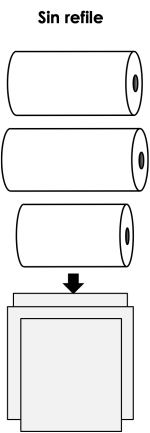
When sheeting multiple paper reels there is normally some width variation within the reels (+/- 1/16"). Because of this, the width (normally) of the resulting paper sheets may have the same variation causing feeding and register problems at the press.

In order to establish adequate paper dimensions tolerances. What would be the maximum variation in paper sheets width that allows to print it without problems?

Javier Martínez
Mexico City.
 

Attachments

  • Reel widht variation.png
    Reel widht variation.png
    34.4 KB · Views: 158
When sheeting multiple paper reels there is normally some width variation within the reels (+/- 1/16"). Because of this, the width (normally) of the resulting paper sheets may have the same variation causing feeding and register problems at the press.

In order to establish adequate paper dimensions tolerances. What would be the maximum variation in paper sheets width that allows to print it without problems?

Javier Martínez
Mexico City.
Wherever possible we run long grain on press, meaning the cutoff would determine the sheet width rather than the reel width, in some cases short grain may be required for binding requirements. Either way, we expect sheets to be within 1mm of specified size in both directions. Most mills will perform a final guillotine cut and not pack stock direct from the sheeter.
 
Grain direction on sheetfed press should be long, which is parallel to cylinders.
It's also parallel to longest dimension of landscape orientation paper sheet.
Grain direction is important for register fit (wavy edge fanout) and wet ink marking due to stiffness of sheet transfer/transport following cylinder path.

Original post mentions feeding and register problems?
Are you talking about feeder trip or knock offs at front/head stop/lays (timing)?
While multiple roll sheeting thin caliper paper, can you rotary slit roll to get consistent size?
Side guide pull on press of 1/4" should accommodate most roll width size variation.
 
Also a great idea to trim the blanket packing to the smallest sheet size for the variance.
That way you reduce the chance of the larger paper splitting onto the blanket, and less fit fluctuation from the tack in the non image area.
Nothing like having to stop multiple times to peel off paper stuck to the blanket.
 
   
Back
Top