Quite Imposing: De-Imposing a booklet?

EdwardB

Well-known member
This one is bugging me, I can see the pattern, but I can't seem to de-construct a traditional saddle stitch booklet using a single Quite Imposing automation.

a 100 page booklet, in printer spreads: 100-1, 2-99, 98-3, 4-97....

"Tile" the pages 2x1... then "manually" de-shuffle the pages? I can make it work if I create a shuffle pattern like so:
2,3,6,7 ... 8,5,4,1

problem is the shuffle pattern would have to be created for every possible page count

it seems I should be able to Tile, then Split the document, reverse half of the pages... then pound my head on my desk, drink a beer, cry a little.... has anyone done this? LOL
 
I’ve never made Quite work like this either. In the situation I need to do this I would drop each page into Indesign as spreads and export the whole document as pages from there. A little bit Tedious to set up the first time for a bigger book but just save the file and use it again + relink pages for the next one, and delete any pages you don’t need for a smaller book.
 
I've done the InDesign thing numerous times as well, and YES, tedious... LOL! good tip on saving the file and just re-linking a new file!

it just seems like there should be some way to do it in Quite, I just can't put my finger on what I'm missing...
 
Sorry, I don't know how to do that task in QI, but unsorting saddlestich layout can be done with a couple of clicks in seconds, regardless of page count, with the software shown in the video.
Disclaimer: I am the lead developer. Feel free to reach out via PM if you are commercial user and would like a copy to try yourself. It is industrial strength software, not suitable for occasional home or hobby users. Kind Regards.

 
Interesting problem.

unfortunatelly, my knowledge of Quite Imposing is “quite” limited,
...but something like this could be done in base Acrobat Pro with JavaScript. Try opening the JavaScript console (CTRL+J, needs to be turned on in Preferences > JavaScript, though) and paste the following lines of code:

function duplicatePages(doc) {
for (i = 0; i<doc.numPages; i++) {
if (i%2 == 0) doc.insertPages(i, this.path, i);
}
}
function getBleedSides(trimBox, bleedBox) {
return {
left: trimBox[0] - bleedBox[0],
bottom: trimBox[3] - bleedBox[3],
right: bleedBox[2] - trimBox[2],
top: bleedBox[1] - trimBox[1]
};
}
function reverseImposition(pages) {
var p = pages*2;
var imposed = [];
for (var i = 0; i < p / 4; i++) {
var left = p - (2 * i);
var right = 1 + (2 * i);
var innerLeft = 2 + (2 * i);
var innerRight = p - 1 - (2 * i);
imposed.push(left);
imposed.push(right);
imposed.push(innerLeft);
imposed.push(innerRight);
}
var result = [];
for (var i = 1; i <= p; i++) {
result.push(imposed.indexOf(i));
}
return result
}

function SpreadsToPages() {
var doc = this;
doc.duplicatePages(doc);
for (i = 0; i<doc.numPages; i++) {
//source document variables
var tbox, bbox, bleed, hw, left, right;
tbox = doc.getPageBox('Trim', i), bbox = doc.getPageBox('Bleed', i);
bleed = getBleedSides(tbox, bbox);
//half width for odd/even page crop
var hw = (tbox[2]-tbox[0])/2;

left = [tbox[0],tbox[1],tbox[0]+hw,tbox[3]];
right = [tbox[2]-hw,tbox[1],tbox[2],tbox[3]];

if (i%2 == 0) doc.setPageBoxes({cBox: 'Trim', nStart: i, rBox: left});
else doc.setPageBoxes({cBox: 'Trim', nStart: i, rBox: right });
//new document variables
var ntb, nbb;
ntb = doc.getPageBox('Trim', i);
doc.setPageBoxes({
cBox: 'Bleed',
nStart: i,
rBox: [ntb[0]-bleed.left, ntb[1]+bleed.top, ntb[2]+bleed.right, ntb[3]-bleed.bottom]
});
nbb = doc.getPageBox('Bleed', i);
doc.setPageBoxes( {cBox: 'Media', nStart: i, rBox: nbb } );
}
}
var sd = this, nd = app.newDoc(), order = reverseImposition(sd.numPages);
sd.SpreadsToPages();
for (var index = 0; index < order.length; ++index) {
var element = order[index];
nd.insertPages ({
nPage: index,
cPath: sd.path,
nStart: element
});
}
sd.closeDoc(true);
nd.deletePages(0);

(Please note, that when you copy a code from PrintPlanet.com, it will add a warning before the copied text, you will need to delete it from the pasted text in the console.)
This should split the document and turn it into a logical page order. In my limited testing. It worked fine.
Turning that into an Acrobat action would be preferrable.
Please give it a go.

If you would like to stay within Quite Imposing, I have made a simple Google Sheet that you can use to get the desired array: Signatures to pages array
Alternatively, the way Quite Imposing works: you can try to flip odd pages by 180 degree and now on the left side, you have first half of the document, on the other is the second half in the reversed order. Try working with that. Flipping those odd pages back shouldnt be a problem.

 
Last edited:
Quite Imposing is designed for imposing PDFs, but it doesn’t offer a true "de-impose" function. Once a file is imposed (e.g., into printer spreads or booklets), the original single pages are no longer individually recoverable unless they were saved separately before imposing.

Options you have:

  1. Check for the original PDF: If you still have the original single-page (1-up) file, that's your best option. Always save the original before imposing.
  2. Extract manually (if no original exists):
    • Use Acrobat or another PDF editor to crop or split imposed pages manually.
    • You can use page boxes (like CropBox or ArtBox) to define the single pages visually, then extract or re-save them.
    • Tedious but possible if the layout is consistent.
  3. Third-party tools: Some imposition tools or plugins (like Quite Hot Imposing or Enfocus PitStop) may help with advanced page manipulation, but they still won’t "reverse" imposition perfectly.
  4. Rebuild the document: If the original is lost and manual extraction isn’t practical, consider rebuilding the booklet from the imposed file as a last resort.
 
Out of curiosity, how did you end up with an imposed document to work with and not the source file?
Is it really what the customer provided? Or did you only archived the imposed file and dropped the source file?
 
Out of curiosity, how did you end up with an imposed document to work with and not the source file?
Is it really what the customer provided? Or did you only archived the imposed file and dropped the source file?
in this particular case, a 15-20yo PDF from our archives. most other cases the file is supplied to us as an imposed/printer-spread file... even worse, often Canva files.

Our customers are about as dumb as rocks and going back to them for single pages is often an exercise in futility.

Edit...
Document is dated 1990 LOL
 
Last edited:
Interesting problem.

unfortunatelly, my knowledge of Quite Imposing is “quite” limited,
...but something like this could be done in base Acrobat Pro with JavaScript. Try opening the JavaScript console (CTRL+J, needs to be turned on in Preferences > JavaScript, though) and paste the following lines of code:

function duplicatePages(doc) {
...

(Please note, that when you copy a code from PrintPlanet.com, it will add a warning before the copied text, you will need to delete it from the pasted text in the console.)
This should split the document and turn it into a logical page order. In my limited testing. It worked fine.
Turning that into an Acrobat action would be preferrable.
Please give it a go.

If you would like to stay within Quite Imposing, I have made a simple Google Sheet that you can use to get the desired array: Signatures to pages array
Alternatively, the way Quite Imposing works: you can try to flip odd pages by 180 degree and now on the left side, you have first half of the document, on the other is the second half in the reversed order. Try working with that. Flipping those odd pages back shouldnt be a problem.

I've actually never used Javascript in Acrobat... and I've been using Acrobat Pro for decades at this point LOL

I have Javascript enabled now, and I've even tried restarting the application, but nothing happens when I paste it into the console and try to run it... nothing... not even a message. I'm checking with our senior systems admin to make sure they don't have any kind of script blocking... he says we have nothing enabled outside of browsers.
 
Interesting problem.

unfortunatelly, my knowledge of Quite Imposing is “quite” limited,
...but something like this could be done in base Acrobat Pro with JavaScript. Try opening the JavaScript console (CTRL+J, needs to be turned on in Preferences > JavaScript, though) and paste the following lines of code:
OK, I did get it to work by creating an Action under "Action Wizard"... when I run it, it works, then immediately crashes Acrobat **sigh**
 
In acrobat you could copy/paste all pages in printer spreads into the same document crop the first half from the left and the second half from the right and resave.
that only works with reader spreads

edit... correction, it would almost work except the 2nd half of the document the pages would be in the reverse order
 
Last edited:
Have you used the "shuffle pages for imposing" feature? You should be able to use the numbers you already provided (2 3 6 7 8 5 4 1), then select "double sided cut stacks", page count should be 8.
 
Have you used the "shuffle pages for imposing" feature? You should be able to use the numbers you already provided (2 3 6 7 8 5 4 1), then select "double sided cut stacks", page count should be 8.
as already stated, to use "shuffle pages" would require creating a program for ever possible combinations of pages, from 4 pages to 100 pages, would require 25 different programs.
 
as already stated, to use "shuffle pages" would require creating a program for ever possible combinations of pages, from 4 pages to 100 pages, would require 25 different programs.
I must be missing something? You don't need total page count for that feature, just the generic rule that repeats.

EDIT: Nevermind, I understand why the page count matters now. Too early for me :ROFLMAO:
 
Last edited:
I must be missing something? You don't need total page count for that feature, just the generic rule that repeats.

EDIT: Nevermind, I understand why the page count matters now. Too early for me :ROFLMAO:
no worries... I thought the same thing when I started going down this rabbit hole. considering we have hundreds of documents that are in our archive already in printer spreads, not including the documents we get new like this nearly every day... we really need a one size fits all solution.

I almost wonder if it could be done via GhostScript and a PowerShell script or Python... but to use a popular vernacular: "That's above my (current) paygrade"
 
Interesting problem.

unfortunatelly, my knowledge of Quite Imposing is “quite” limited,
...but something like this could be done in base Acrobat Pro with JavaScript. Try opening the JavaScript console (CTRL+J, needs to be turned on in Preferences > JavaScript, though) and paste the following lines of code:
Even after reboot... it doesn't crash immediately, but when I try to save the new PDF file it crashes 😓
 
Sorry about deleting my original post I knew I was forgetting a step. after cropping the second half of the book print to pdf and use the reverse page check box to create a new second half.
 
that only works with reader spreads

edit... correction, it would almost work except the 2nd half of the document the pages would be in the reverse order
Sorry about deleting my original post I knew I was forgetting a step. after cropping the second half of the book print to pdf and use the reverse page check box to create a new second half in reverse order.

Since these are files from the 1990's I would do it this way.
 
Sorry about deleting my original post I knew I was forgetting a step. after cropping the second half of the book print to pdf and use the reverse page check box to create a new second half in reverse order.

Since these are files from the 1990's I would do it this way.
"Reverse Pages" reverses all of the pages, you can not select a range.
 
print pages 11-24? you can't with the check box of reverse pages I can.
 

Attachments

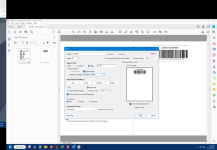
  • print range with reverse button showing.png
    print range with reverse button showing.png
    113 KB · Views: 181
   
Back
Top