
You are using an out of date browser. It may not display this or other websites correctly.
You should upgrade or use an alternative browser.
You should upgrade or use an alternative browser.
translucent paper
- Thread starter maas
- Start date

TheProcessIStheproduct
Well-known member
doable, but...
doable, but...
watch your densities, that stuff does not dry for crap, and if you can get real thick stuff like 40#, glama comes in a 19, 29# both can be tricky...
doable, but...
watch your densities, that stuff does not dry for crap, and if you can get real thick stuff like 40#, glama comes in a 19, 29# both can be tricky...
turbotom1052
Well-known member
as mentioned ink densities need to be kept down. A fully oxidizing ink would be strongly suggested. When printing on this paper i like to slip a sheet of regualr white stock under the sheet of translucent im viewing so that the image is not affected by the show through of the sheet underneath
Its tough, everyone here is correct, drying and flatness in the print are the real issues. The only way we get a nice crisp image is 2 passes laying down opaque white first. 2nd pass is the spot /4 c image. Trans paper usually registers pretty well but check it out of the box. Sometimes weve found it off by as much an 1/8. I usually have the pressmen kick up the heat a couple degrees.
QualityPrint
Well-known member
Make sure you rack the job in small lifts as it will offset easily with only medium coverage. Also, I agree that some sort of oxybind ink should be used if you want it to dry. We have printed on really light translucent stock and it was tough to even get it to lay into the delivery without scuffing. Tough stuff... but can be done.
TheProcessIStheproduct
Well-known member
Also no matter how hard you push your ink densities they will look faded on Translucent. Glamma and Uv ultra have same results. Printed on an Indigo they look great. Indigo ink sits on top of the sheet real nice.
are you cutting down folio or running digital sheets, I have had mixed results cutting down and running on Indigo?
GPA sells a treated sheet of translucent stock. The problem with it is equivalent to 19 lb which is the heavier stock. 17 lb which is the flimsy stock I dont think is available. We tried using Glamma and UV Ultra on our indigo and the ink would not adhere to it properly. It was years ago when we tried it so maybe the new ink formulations work better on the stock
Here's a couple things to keep in mind when printing on a translucent sheet:
Imagery should be adjusted in prepress to compensate for the 7 – 10% tone value increase that will occur. The exact amount is image specific. Total dot area should not exceed 320%.
Use oxidizing inks
Depending on the brand, some are laser guranateed. In general, ink jet is not recommended (due to drying).
When folding, make sure to go with the grain - I'd be careful about folding anything heavier than a 30# translucent. (It's due to the manufacturing process and how the sheet actually gets is translucency- trade offs).
If you are cutting, use a dull blade
When binding - go with the grain.
Imagery should be adjusted in prepress to compensate for the 7 – 10% tone value increase that will occur. The exact amount is image specific. Total dot area should not exceed 320%.
Use oxidizing inks
Depending on the brand, some are laser guranateed. In general, ink jet is not recommended (due to drying).
When folding, make sure to go with the grain - I'd be careful about folding anything heavier than a 30# translucent. (It's due to the manufacturing process and how the sheet actually gets is translucency- trade offs).
If you are cutting, use a dull blade
When binding - go with the grain.
Thank you for your input
We are running a test this week and i will report on how it went, as a pepsi challenge the press is a Goss HT70 (newspaper) press which is coldset i.e. no drying
the press itself will be cleaned and a stripe test will confirm ink train tolerances, i have set the TIC at 170% and will run G7 targets
regards
maas
We are running a test this week and i will report on how it went, as a pepsi challenge the press is a Goss HT70 (newspaper) press which is coldset i.e. no drying
the press itself will be cleaned and a stripe test will confirm ink train tolerances, i have set the TIC at 170% and will run G7 targets
regards
maas

Alois Senefelder
Well-known member
Good Luck
Good Luck
Hello Maas,
This substrate is a poor-absorbent , so good luck trying !
for your next project - try 30gsm Airmail Paper !!!!!!!!
Regards, Alois
Good Luck
Hello Maas,
This substrate is a poor-absorbent , so good luck trying !
for your next project - try 30gsm Airmail Paper !!!!!!!!
Regards, Alois
Last edited:
turbotom1052
Well-known member
good luck with that one
I've run it a few times on a commercial heatset webpress. It's been a while but must have been at least 50lb stock. It dried fine and ran ok, but no matter what as soon as the press went down the web broke. You may not have that issue on a Goss, as I recall it was the oven making the paper brittle at low speed. As stated before, you have to back up any sheet you look at with a white sheet of paper. Every time I had have the K screens cutback in the process areas to make up for the fact that the paper it "not white", so anything process always appears "more black"
Afternoon
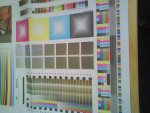
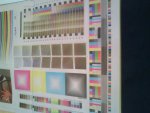
We ran the press test, very successfully i may add, no issues realy other than loosening up the secont rollers in the folder, ran A Gracol G7 test page concurrently with TVI of 240%.
due to the lack of absorption of water registration to the image on newsprint may go out as the paper stock will fan out
i think the key was the press itself, as mentioned before by a member no oven meant the paper didnt go brittle
We ran the press test, very successfully i may add, no issues realy other than loosening up the secont rollers in the folder, ran A Gracol G7 test page concurrently with TVI of 240%.
due to the lack of absorption of water registration to the image on newsprint may go out as the paper stock will fan out
i think the key was the press itself, as mentioned before by a member no oven meant the paper didnt go brittle
Attachments
Similar threads

- Replies
- 4
- Views
- 1K
- Replies
- 0
- Views
- 583